

Let’s face it, sometimes making decisions can be a stressful experience.
Dealing with choices can be a significant source of stress and anxiety, especially when there is a lot of change and uncertainty going on.
Being an assertive decision-maker will equip us with the tools and mindset to navigate these situations with greater ease.
By taking a proactive and structured approach to decision-making, we will be able to gain a sense of control over challenging situations and choices.
This feeling of confidence and control can reduce the fear of uncertainty, leading to lower stress levels and improved overall wellbeing.
Knowing we can confidently tackle decisions empowers us to face challenges head-on rather than feeling overwhelmed and stressed by them.

So how can decision-making boost our confidence?
The experience of making well-reasoned and successful decisions can build a strong sense of self-belief and confidence.
Each positive outcome reinforces trust in our own judgement, making future decision-making processes smoother and more confident.
This growth in confidence can also act as a buffer against ‘analysis paralysis’ – the state of overthinking that prevents action.
When we gather sufficient information, evaluate it effectively and act decisively, it can help us to feel empowered.
It is important that we also focus on extracting lessons from the decisions we make that don’t always work out as well as we would have liked and view them as an opportunity for growth.
This, in turn, builds resilience and future confidence in our decision-making abilities.
So let me introduce you to one of my favourite time management models (if you haven’t encountered it already)
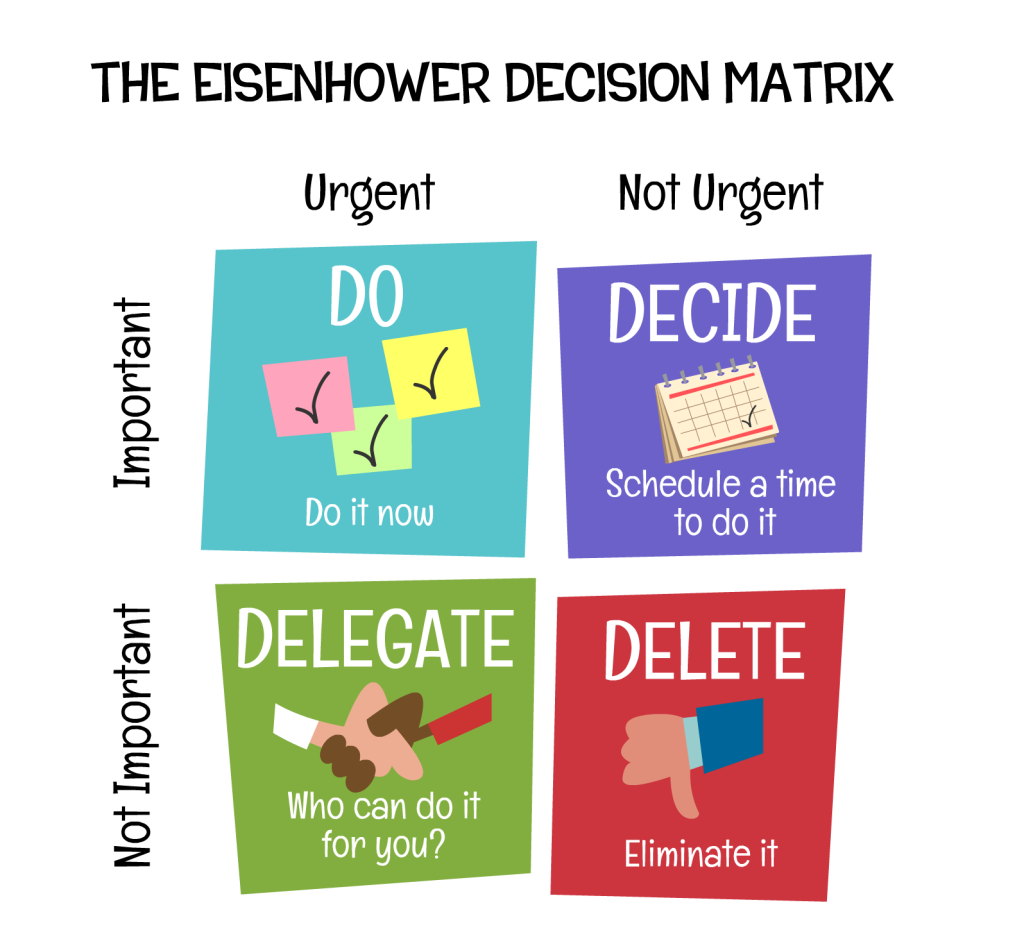
The Eisenhower Decision Matrix
This Matrix was developed by Dwight D.Eisenhower who was the 34th president of the United States and the Supreme Commander of the Allied Expeditionary Force in Europe during the second world war
It is a simple and powerful tool for prioritising tasks based on their urgency and importance.
It can help us to identify what truly matters and distinguish between what needs immediate attention and what can be planned.
It will also help us to focus our energy on high- impact activities and reduce the feeling of being overwhelmed by a long to-do list.
The Eisenhower Decision Matrix is divided into four boxes
The urgent and important – These are the tasks we should tackle immediately and could be deadlines or problems that need our direct attention.
The important and not urgent – These tasks are crucial for our long-term goals and should be scheduled in for later. This is where we need to focus our time to prevent things from becoming urgent. This could be planning, learning new skills, or building relationships.
The urgent and not important – These tasks demand our attention; however, they don’t contribute significantly to our goals. If possible, it is better to delegate them to someone else. This could be meetings, interruptions or requests that don’t directly involve our key responsibilities.
The neither urgent nor important – These are tasks that are mostly distractions and should be avoided or eliminated altogether and are likely time-wasting activities.
By using this matrix, we can make conscious decisions about how we spend our time and energy, leading to greater productivity and less stress.
So here are 3 simple tips on how to be a better decision maker
- Keep a cool head

Keeping as calm and relaxed as possible when we are making decisions will help us to think more clearly, focus our attention and embrace a rational assessment of a situation.
By managing our emotions, we can avoid impulsive reactions and make decisions based on logical analysis rather than emotional bias.
This will lead us to more effective and well-informed decisions.
A calm mind allows for better concentration and the ability to process information thoroughly, leading to a clearer understanding of a situation and our available options.
Deep breathing, mindfulness, progressive muscle relaxation and scheduling in time for relaxation can help us to feel calmer.
Knowing when to take a break is key too because sometimes the most productive thing we can do is relax.
- Weigh up pros and cons
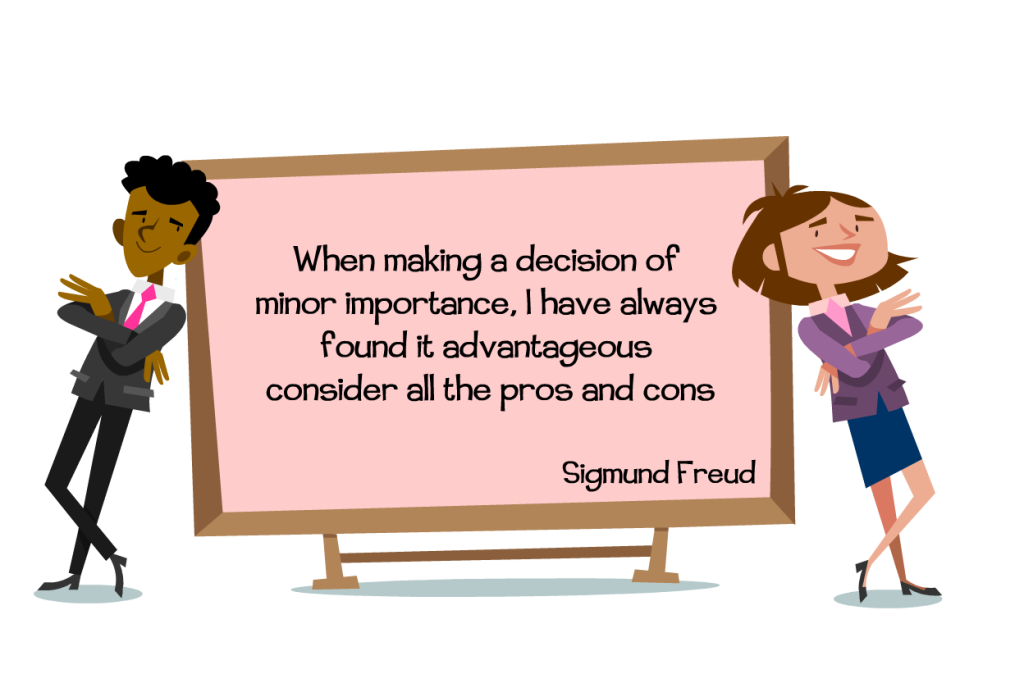
Weighing up the pros and cons is a traditional and time-tested method and often effective step in the decision-making process.
It involves systematically listing the potential advantages (pros) and disadvantages (cons) associated with each available option.
This structured approach can help to bring clarity to the potential outcomes and allows for a more objective comparison between choices.
It can also be more helpful to flip it the other way round and draw up a cons and pros list so we don’t sabotage all the pros and end up focusing on all the cons.
By carefully considering both the negative and positive aspects of each option, we can gain a clearer understanding of the potential trade-offs involved.
This process encourages a balanced perspective, moving beyond immediate emotional responses to a more rational evaluation of the potential consequences.
Ultimately, a well-thought-out cons and pros list can provide valuable insights to guide us towards a well-considered and confident decision.
- Sleep on it
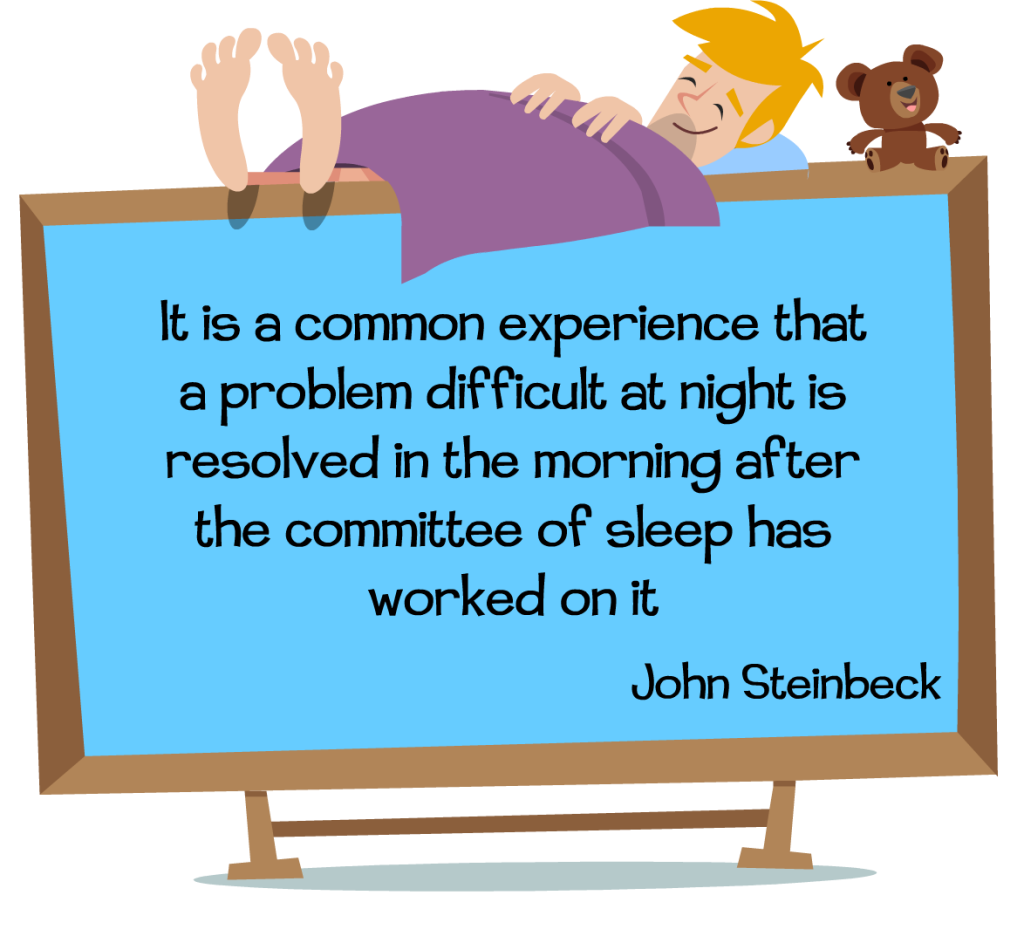
Sleeping on a decision (when possible) may offer significant benefits by allowing our subconscious mind to process information without the immediate pressure of conscious thought.
During sleep, our brain continues to work on the problem, consolidating memories and making new connections.
This can sometimes lead to fresh insights and a clearer perspective.
Taking a break overnight also helps us to detach emotionally from the immediate urgency of the decision.
The clarity gained after a good night’s rest can lead to a more confident and well-reasoned choice, as we approach the decision feeling refreshed and less emotionally charged.
Summary
It also helps to build in reflection time to review our decisions because it can transform our experiences into profound learning opportunities.
Reflection encourages a crucial element of self-awareness and helps us to identify our strengths and weaknesses by revealing recurring patterns of behaviour and blind spots that we might otherwise overlook.
By making reflection a regular practice, we can actively invest in our personal growth and development.
This will help us to continuously learn from experience and fine-tune our ability to be better decision-makers going forward.
-
 Decision Making£2.99